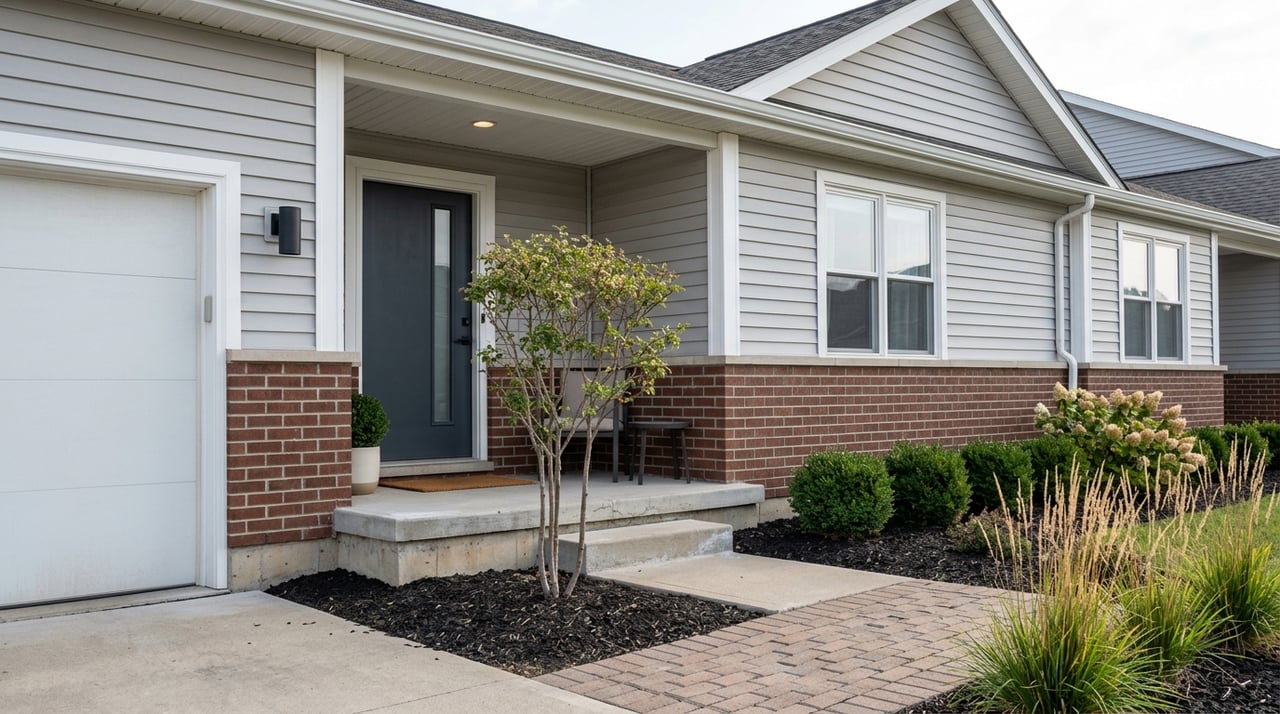
Wondering if you can own a home in Butler without spending every weekend on yard work, exterior repairs, and endless upkeep? You are not alone. Many buyers want a home that feels manageable, affordable, and practical, especially when work, family, and commuting already take up so much time. The good news is that low-maintenance living in Butler can take a few different forms, and the right fit depends on what you want to handle yourself versus what you want built into the property or community. Let’s dive in.
What low-maintenance living means
Low-maintenance living does not always mean the same thing to every buyer. For some, it means no mowing and less exterior upkeep. For others, it means a smaller home, a shorter commute, and fewer surprise projects.
In Butler, that conversation is worth having early because the home type, association structure, and city costs all affect your day-to-day experience. A condo, a townhome, and a smaller detached home can all be low-maintenance in different ways.
Why Butler can appeal to practical buyers
Butler is the county seat of Butler County and sits about 35 miles north of Pittsburgh. The city promotes its downtown shopping and restaurant district and offers the feel of a small town with access to broader metropolitan services.
From a numbers standpoint, Butler city may also appeal to buyers looking for more compact ownership options. Census QuickFacts show Butler city’s 2024 population estimate at 13,010, with owner-occupied housing at 46.1%, a median owner-occupied value of $108,100, and median monthly owner costs with a mortgage of $1,132. By comparison, Butler County overall is more owner-occupied at 76.9%, with a median owner-occupied value of $294,200 and median monthly owner costs with a mortgage of $1,845.
That does not mean every home in the city is low-maintenance. It does suggest that if you are looking for a more affordable, manageable ownership setup, Butler city may give you more options to explore.
Low-maintenance home types in Butler
Condos
A condominium is often the clearest low-maintenance option. You own your unit, but the community or association usually handles common areas and may also cover exterior repairs and maintenance through condo fees.
Depending on the community, those fees may also help cover water, sewer, trash, insurance, or reserve funding for future repairs. The trade-off is that you will have recurring association dues and more shared decision-making about how the property is managed.
If your goal is to spend less time on exterior upkeep, a condo can be appealing. You will just want to look closely at what the fee includes and whether the association is financially stable.
Townhomes and planned communities
Townhomes can offer a middle ground between a condo and a detached house. They often reduce some of the maintenance burden while still giving you a more house-like layout.
In Pennsylvania, the details matter. In a condominium or planned community, the association is generally responsible for common elements while each owner is responsible for the unit itself, unless the declaration says otherwise. That means one townhome community may handle more exterior work than another, so it is important not to assume they all operate the same way.
Townhomes can work well if you want less maintenance than a larger detached home but are comfortable with HOA rules, shared spaces, and monthly dues.
Smaller detached homes
A smaller detached home can also be a smart low-maintenance choice, especially if the lot is modest and the exterior is in solid condition. This option gives you more privacy and fewer shared rules than a condo or townhome.
The trade-off is simple: more of the upkeep stays with you. If you are considering this route, pay attention to lot size, roof and siding condition, snow removal needs, and whether the overall property feels manageable for your schedule.
City services can lighten the load
Low-maintenance living is not only about the house itself. City services can also make daily life easier.
The City of Butler bills residential solid-waste service every three months in advance. It provides weekly trash collection, every-other-week recycling, and one bulky item on the alternate recycling week. Recycling is mandatory, which is another detail to keep in mind when planning your routine.
For some buyers, that setup removes a few chores from the list even if they do not buy in an HOA community. Butler city also had a mean travel time to work of 22.1 minutes, compared with 27.4 minutes countywide, which may matter if you are trying to balance maintenance, commute time, and a busy schedule.
What to budget beyond the mortgage
One of the biggest mistakes buyers make is assuming low-maintenance means low-cost. Sometimes it can, but often it just shifts where the costs show up.
HOA or condo fees are usually separate from your mortgage payment and property taxes unless they are being escrowed. Those fees can buy back time by covering exterior maintenance, common-area work, insurance, or reserves, but they can also rise over time.
Special assessments are another factor. If a community needs a major repair or capital project, owners may have to contribute additional money beyond regular dues.
For Butler city buyers, local costs matter too. Butler County’s official tax information lists county real estate tax at 27.626 mills, and the county millage sheet lists Butler City’s 2025 total millage at 181.266 mills. The city also levies a flat $10 per-capita tax on residents age 18 and older, whether they own or rent.
The key is to compare the full picture:
- Mortgage payment
- Property taxes
- HOA or condo dues
- Insurance
- Trash and service costs
- The value of the time and upkeep you are avoiding
What to review before buying in an HOA or condo
If you are considering a condo, townhome, or planned community, the documents matter just as much as the floor plan. A home can look easy to maintain on the surface while hiding rules, financial issues, or future expenses.
Core governing documents
Before you buy, review the declaration or CC&Rs, bylaws, and community rules or regulations. These documents explain fees, use restrictions, and approval requirements for changes like painting, landscaping, or structural work.
This matters in Butler because even simple exterior changes may not be fully up to you. If the property is inside city limits, you may also need to check with the City of Butler’s Building Code Official for permit requirements on residential projects.
Financial health of the association
For condo and planned-community resales in Pennsylvania, the resale certificate should include important financial details. That includes the monthly assessment, unpaid assessments, other fees, planned capital expenditures for the current and next two fiscal years, reserve amounts, the latest balance sheet and income-expense statement, and the current operating budget.
These items help you see whether the community appears well-managed or whether higher dues or a special assessment may be more likely later. If a low-maintenance lifestyle depends on the association doing its job well, the numbers deserve a close look.
Legal and operational details
The resale packet should also identify any judgments or pending suits, insurance coverage, known violations, lease-term issues, whether the community is part of a master association, and whether merger or time-share rights exist.
You should also ask practical questions that affect daily life, such as:
- What maintenance is covered by the association?
- What stays with the owner?
- Are any special assessments planned?
- Are reserve funds adequate?
- What do the fees actually include?
- What are the pet, parking, rental, and exterior-change rules?
- Are there structural issues or major capital projects on the horizon?
Pennsylvania protections buyers should know
Pennsylvania gives buyers some useful protections in condo and planned-community resales. The association must provide the resale certificate within 10 days after a unit-owner request.
The purchase contract is voidable until the certificate has been provided and for five days afterward, or until conveyance, whichever comes first. That gives you time to review the community information before moving too far forward.
Pennsylvania’s property disclosure form also asks about stormwater facilities and who is responsible for ongoing maintenance. That may not sound exciting, but it is part of understanding what low-maintenance really means after closing.
How to choose the right fit
The best low-maintenance option in Butler depends on your budget, your tolerance for rules, and the kind of tasks you want off your plate. There is no one-size-fits-all answer.
If you want the least exterior upkeep, a condo may make the most sense. If you want a more traditional home feel with some shared maintenance, a townhome or planned community could be a strong middle ground. If you want more independence and fewer shared rules, a smaller detached home may be the better match.
A smart search starts with a few honest questions:
- How much exterior work do you want to handle yourself?
- Are you comfortable with HOA rules and monthly dues?
- Do you want shared walls or more separation?
- How important is a shorter commute or easier in-town living?
- Would you rather pay fees for convenience or keep control and handle more yourself?
When you answer those questions clearly, the right property type usually becomes much easier to spot.
If you are thinking about low-maintenance living in Butler, the goal is not just finding a home that looks easy on day one. It is finding a property that stays manageable for your time, budget, and lifestyle over the long run. For practical guidance on comparing your options in Butler and the surrounding area, connect with Jennie Spohn-Rousseau.
FAQs
What does low-maintenance living in Butler PA usually mean?
- It usually means choosing a home and ownership setup that reduces exterior upkeep, yard work, or shared property responsibilities, while still fitting your budget and daily routine.
What home types offer low-maintenance living in Butler PA?
- Common options include condos, townhomes in planned communities, and smaller detached homes with modest lots and manageable upkeep needs.
What should buyers review before purchasing a Butler condo or townhome?
- Review the declaration, bylaws, rules, resale certificate, monthly fees, reserve funding, planned capital projects, insurance details, and any pending legal or financial issues affecting the community.
Are HOA fees in Butler PA included in the mortgage payment?
- Usually no. HOA or condo fees are typically separate from the mortgage payment and property taxes unless they are being escrowed.
What city costs should buyers budget for in Butler PA?
- Buyers should budget for property taxes, residential trash and recycling service billed quarterly by the city, insurance, and the city’s $10 per-capita tax for residents age 18 and older.
Can buyers make exterior changes to a home in a Butler HOA community?
- Possibly, but you should check both the community rules and whether city permits are required through the City of Butler before assuming a change is allowed.