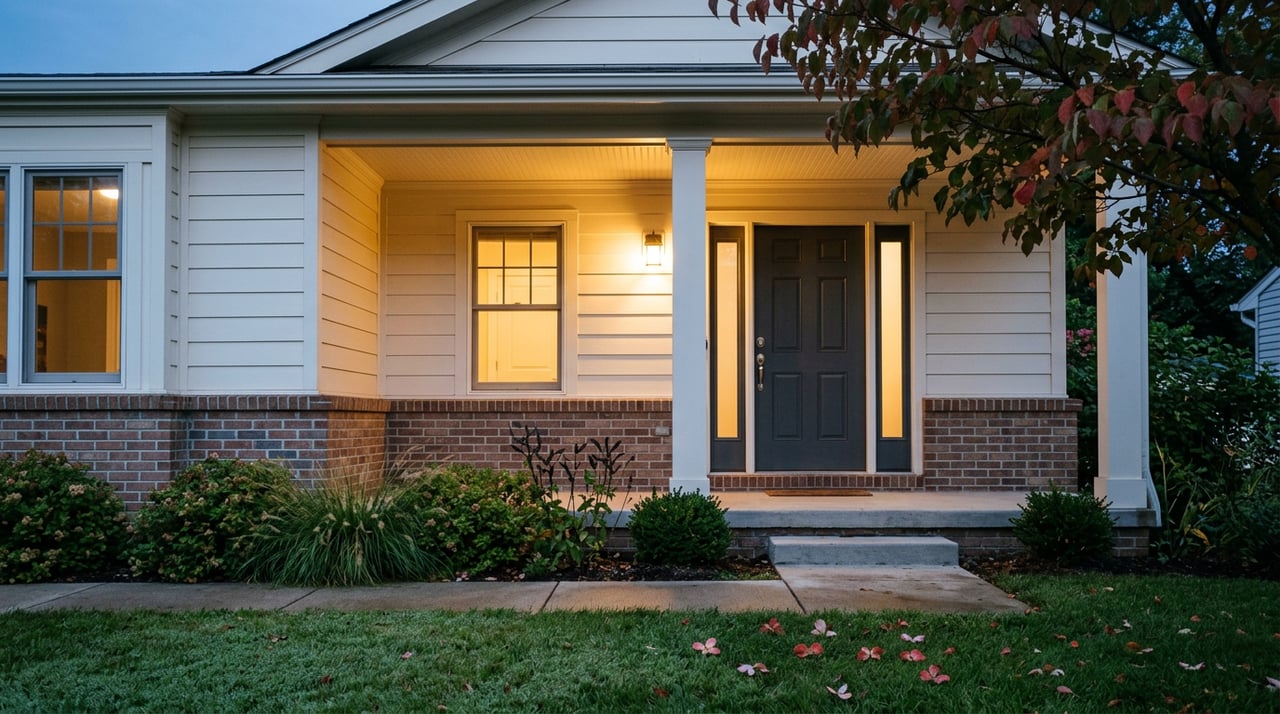
Picture closing on a house in Butler County this month for $310,000. A few weeks later, the assessment notice from the county shows up, and the number on it reads $19,800. No decimal point missing, no clerical mistake at the courthouse. That figure isn't a year or two out of date. It traces back to 1969, the last time Butler County ran a full, parcel-by-parcel reassessment of every property it taxes.
That gap between what a house sells for and what the county says it's worth is not a quirk of one weird property. It's the system working exactly as designed, and understanding it changes how a buyer or seller should read their tax bill, their closing statement, and any advice they get about appealing.
The number on your notice was frozen decades ago
Pennsylvania is one of only two states in the country, alongside California, that doesn't require counties to periodically update property assessments. Instead, each county picks a base year, values every property once, and then leaves that valuation in place indefinitely unless the county chooses to reassess again. Butler County's base year is 1969, which means the assessed value sitting in the county's records reflects what an appraiser thought a property was worth during the Nixon administration, not what a buyer would pay for it today.
This matters because the assessed value is the number the county actually taxes. Millage rates get applied to that 1969-era figure, not to the sale price on the deed. A buyer who assumes their new purchase price will show up as the new tax basis is assuming something Pennsylvania law doesn't allow.
How the state bridges a 57-year-old number to today's prices
Every year, the State Tax Equalization Board reviews arm's-length property sales across the state and calculates a Common Level Ratio for each county, the median relationship between assessed value and actual sale price for properties that sold. Counties that reassess often have ratios close to 100 percent, since assessed values already track market prices closely. Counties that haven't reassessed in decades look very different.
Statewide data compiled for 2021 sales put that contrast in stark relief: Butler County's ratio came in at 7.1 percent, the lowest in Pennsylvania, while Indiana County, which had reassessed as recently as 2016, sat at 94.0 percent. In practical terms, a Butler County assessed value in that period represented roughly one-fourteenth of what the property would actually sell for, while an Indiana County assessment was nearly a dollar-for-dollar match to market value.
The Pennsylvania Department of Revenue also publishes the reciprocal of that ratio, called the Common Level Ratio Factor, which is what shows up on realty transfer tax filings and appeal paperwork. Butler County's factor was 16.67 for documents accepted between July 1, 2025, and June 30, 2026, and the county publishes a new factor every July. Multiply an assessed value by that factor and you get an estimate of current market value. A property assessed at $20,000 times 16.67 works out to an implied market value around $333,400, which is a far more useful translation of that old number than the assessed figure alone.
| County | Last countywide reassessment | Common Level Ratio (2021 sales data) |
|---|---|---|
| Butler | 1969 | 7.1 percent |
| Indiana | 2016 | 94.0 percent |
The wider the gap between last reassessment and today, the smaller the ratio and the larger the multiplier needed to translate assessed value into anything resembling market value. Butler County sits at the far end of that spectrum.
Buying the house does not reset the number
Here's the part that surprises buyers most, and it cuts in their favor. In Pennsylvania, a sale by itself cannot legally change a property's assessment. The state's own legislative deskbook on real estate assessment spells this out directly: apart from a full countywide reassessment, the county assessment office can only change an individual property's value when a specific triggering event occurs. Those events are limited to a subdivision, a physical change such as new construction or demolition, a catastrophic loss, or a change in the property's tax-exempt status. A closing, on its own, isn't on that list. Courts have found that using the sale price alone to justify a new assessment amounts to unconstitutional spot reassessment.
That's genuinely good news for a buyer worried that paying market price will spike their tax bill the moment the deed records. It won't, at least not automatically. What it also means is that two nearly identical houses on the same street can carry very different tax bills for years, simply because one changed hands more recently and had improvements recorded while the other sat with an owner who never pulled a permit.
What actually moves your bill from year to year
None of this means Butler County tax bills stay flat forever. The county still mails County and Municipal Property Tax Bills every March 1 and School Property Tax Bills every August 1, and those bills change when millage rates change, even if the underlying assessed value doesn't move at all, according to Butler County's own assessment department page. School districts, municipalities, and the county each set their own millage annually based on budget needs, and that rate gets applied to whatever assessed value is currently on file. A buyer comparing two towns within Butler County should look at the local millage rate as closely as the assessed value itself, since the same $20,000 assessment can carry a noticeably different bill depending on which school district and municipality it sits in.
If you think your assessment is out of line with your neighbors'
Pennsylvania counties don't share a single statewide appeal deadline. Each county sets its own annual window, and most fall somewhere between August 1 and October 1, with the date shifting to the next business day if it lands on a weekend. That window for the coming tax year has already closed for most Pennsylvania counties as of this writing, which makes now a good time to understand the process rather than scramble for it. Appeals in Pennsylvania don't ask whether an assessment matches today's market value directly. They ask whether a property is assessed fairly relative to other properties valued in the same 1969 base year, using the Common Level Ratio as the conversion tool. A homeowner building a case typically needs comparable sales and clear documentation, and the county's Board of Assessment Appeals reviews that evidence rather than simply accepting a lower number on request. This is general information, not tax or legal advice, and anyone considering an appeal should confirm current deadlines and procedures directly with the Butler County Assessment Department.
A few questions this raises
Does buying a house reset its assessed value to the sale price? No. A sale alone cannot legally trigger a reassessment in Pennsylvania. The assessed value only changes through a countywide reassessment or a specific triggering event like new construction, subdivision, or a catastrophic loss.
If I finish a basement or add a garage, will that change my assessment? It can. Physical changes to a property, including new construction, are one of the recognized triggering events that allow the county to adjust an individual assessment outside of a full reassessment.
Does this work the same way in Saxonburg as it does in the city of Butler? Yes. Saxonburg Borough, Butler City, and every other municipality in the county are assessed by the same Butler County Assessment Department using the same base year and the same annual Common Level Ratio. What differs from one municipality to the next is the local millage rate, which is why two similarly assessed homes in different school districts can still owe noticeably different tax bills.
Understanding this mechanism won't change what a home is worth, but it changes how to read the paperwork around it. An assessed value on a listing sheet or a closing disclosure is not a market opinion. It's a 1969 figure waiting for the annual ratio to translate it into something current.
If you're weighing a purchase or sale in Butler, Saxonburg, or anywhere else in Western Pennsylvania and want help reading what the numbers on a property actually mean, Jennie Spohn is a phone call away. Let's Connect.